
September 11, 2026 marks 25 years since the attacks on the World Trade Center, the Pentagon, and Flight 93. It is a day to remember the people lost, the responders who acted under extraordinary conditions, and the workers and community members whose health risks did not end when the immediate emergency was over.
For safety professionals, the lasting lesson is not limited to one disaster or one industry. It is about what happens when an emergency creates uncertain exposures, rapidly changing work conditions, and a workforce assembled from many employers, agencies, trades, and volunteer groups.
At the World Trade Center site, responders and recovery workers faced a complex mix of hazards: unstable structures, fire, heavy equipment, fatigue, noise, sharp debris, and airborne dust and combustion products. In the first hours and days, rescue was rightly the priority. But as the work shifted to recovery, debris removal, hauling, cleaning, and restoration, the hazard picture changed. The work became longer-term, more routine-looking, and still far from routine.
That transition matters. Many organizations are prepared to evacuate, account for people, call emergency services, and secure a scene. Fewer are ready to answer the next set of questions: Who entered the affected area? What tasks did they perform? Where were they working and for how long? What contaminants may have been present? What protective equipment was issued, fitted, and actually used? Who owns those records five, ten, or twenty years later?
The World Trade Center Health Program exists because the health consequences of the disaster extended well beyond the initial response. It provides monitoring and treatment for eligible people affected by the attacks and their aftermath. In August 2026, NIOSH also announced a new research effort focused on people who may have been exposed while they were 21 or younger, recognizing that there are still important unanswered questions about early-life exposure.
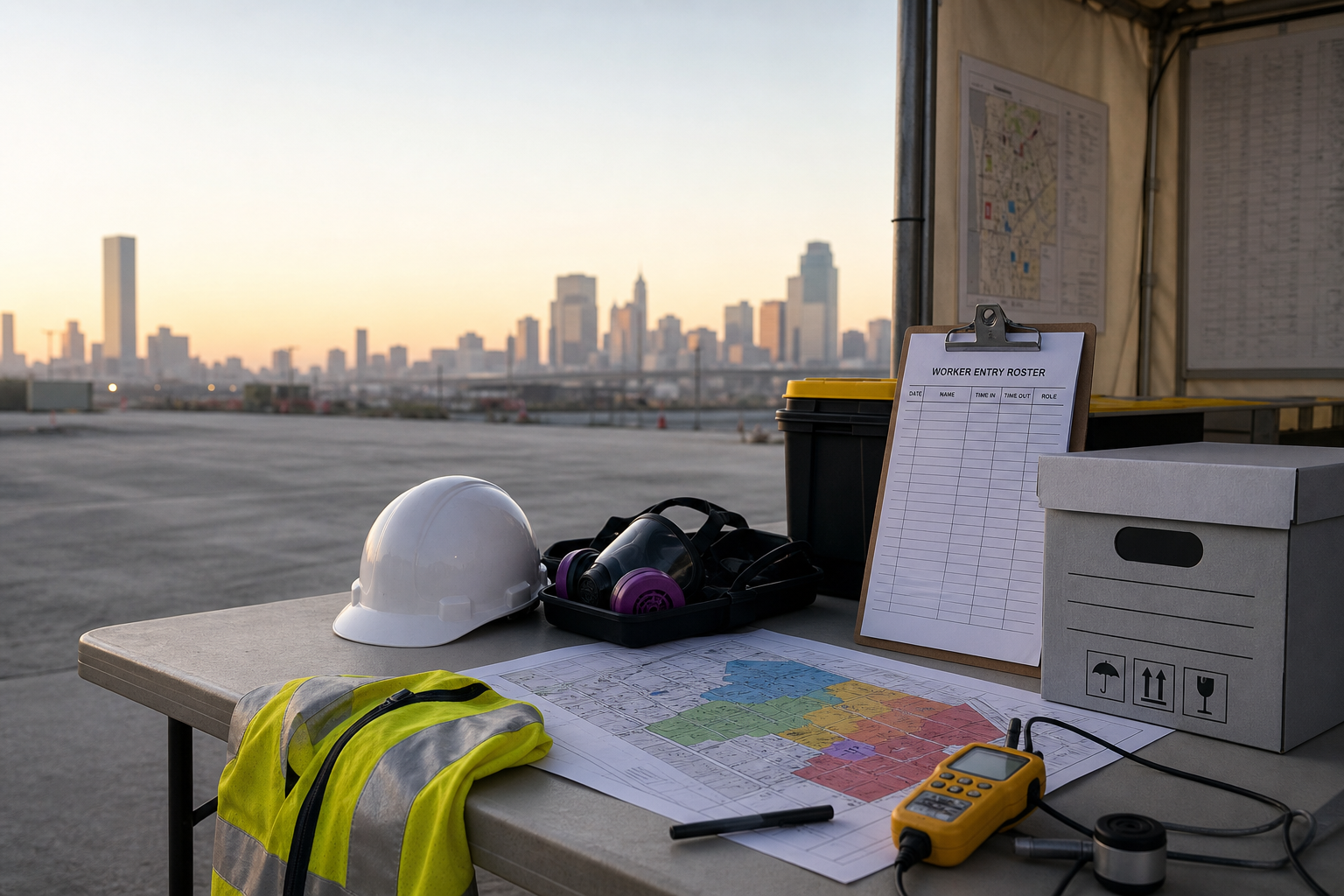
That is a sobering reminder for anyone responsible for emergency planning. We often think of incident documentation as an administrative duty that can wait until the operation slows down. In reality, the first shift may be the only time to capture information that cannot be recreated later. A work roster, a map of work zones, task assignments, weather conditions, sampling results, respirator fit-testing records, and a clear description of changing conditions can become critical health information.
This does not mean every employer needs to build a public-health program. It means every emergency plan should include an exposure-management section that is as practical as the evacuation map. Assign someone to maintain a responder and worker roster. Establish a simple system to record dates, locations, tasks, employers, and protective equipment. Preserve industrial-hygiene data and incident logs in a format that can still be found years later. Give workers a clear path for reporting symptoms and obtaining follow-up care without having to prove, from memory, where they were or what they did.
Respiratory protection deserves special attention. When dust, smoke, unknown particulates, or combustion products are present, organizations should not treat a disposable mask as a complete plan. The right protection depends on the hazard, the work, the fit, training, medical clearance where required, and supervision in the field. Conditions can change quickly, so initial controls must be reassessed as the operation moves from rescue to cleanup and restoration.
The broader point is that emergency response is not only about getting through the first operational period. It is also about protecting the people who will carry the work forward after public attention moves on. The best plans recognize that the incident may end on paper long before its safety and health consequences do.
Add an exposure-management annex to your emergency plan: identify who will maintain worker and responder rosters, record locations and tasks, preserve exposure and PPE records, and communicate how people can obtain follow-up support after the incident.
When an incident creates uncertain exposures, protect people for the long term by documenting the work from the first shift.