
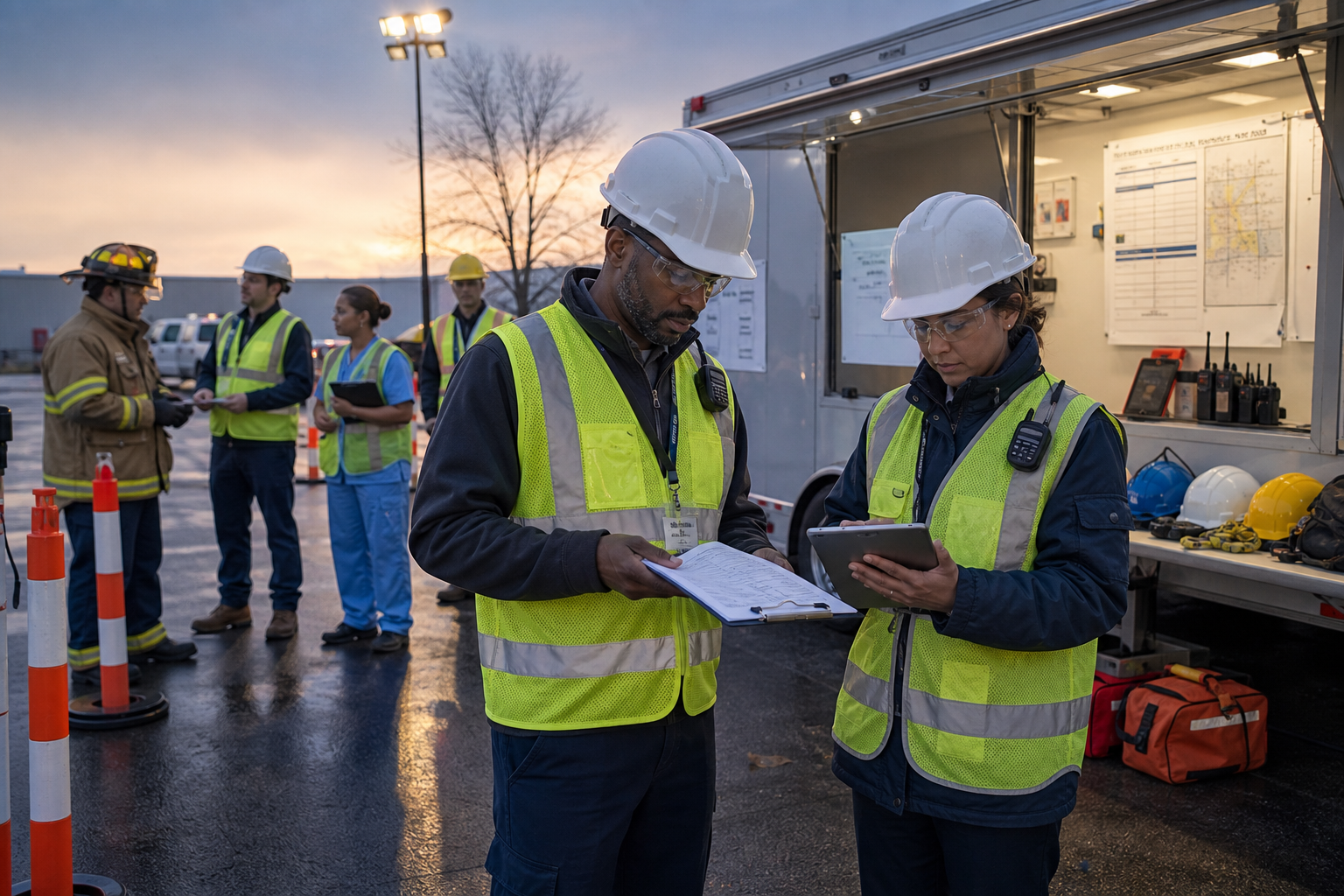
On September 11, many of us pause to remember the people lost in 2001 and the responders, recovery workers, healthcare staff, public servants, tradespeople, volunteers, and others who worked through the aftermath. For safety professionals, there is also a hard operational lesson worth carrying forward: during an emergency, protecting workers includes preserving a usable record of what they did, where they worked, what they may have encountered, and what controls were in place.
That point can sound administrative until years pass.
The World Trade Center Health Program now serves more than 125,000 responders and survivors affected by the September 11 attacks and their aftermath. Its covered conditions include respiratory illnesses, cancers, mental health conditions, and other health concerns. Not every later health issue can be tied to a particular workplace exposure, of course. But workers and clinicians are in a far better position to ask the right questions when a person’s work location, job tasks, duration, and potential exposures were documented while the response was happening.
This is not only a lesson for terrorism or major disasters. Think about a warehouse fire, a chemical release, flood cleanup, a long utility outage, a severe-weather response, a building collapse, a hazmat incident, or a healthcare surge. The workforce may quickly expand beyond the usual fire, police, and EMS personnel. Contractors, equipment operators, restoration crews, sanitation workers, public works teams, security staff, nurses, maintenance personnel, and volunteers can all enter unfamiliar or changing conditions.
The operational pressure is real. Supervisors are trying to get people checked in, assigned, equipped, fed, rested, and safely home. A detailed exposure record can feel like one more demand at the worst possible moment. That is precisely why the process needs to be simple, preplanned, and built into incident operations rather than left to memory after the fact.
A practical response roster should do more than count heads. It should identify the person, employer or agency, contact information, arrival and departure time, assigned location or zone, supervisor, and basic task. For higher-risk work, add the work area, known or suspected hazards, equipment used, PPE issued, respirator status when applicable, unusual events, and any symptoms or injury report. If tasks or work zones change, the record should change with them.
The point is not to create a perfect industrial-hygiene study in the middle of every incident. It is to create enough reliable information to make better decisions now and preserve a credible starting point later. NIOSH’s responder health monitoring framework specifically connects rostering with PPE distribution, exposure assessment, job-task documentation, controls, and health monitoring. That connection matters. A roster says who was present. A task and exposure record begins to explain what “present” meant.
For supervisors, this can improve the response immediately. Accurate records help incident leadership avoid assigning a worker to a task outside their training, medical clearance, or respirator capability. They make it easier to see who has already worked extended hours, who entered a hot or contaminated zone, and who may need rest, medical evaluation, or different duties. They also help the next shift understand what conditions actually existed instead of relying on incomplete verbal handoffs.
For employers, the key is to settle the basics before the next event. Decide who owns responder check-in. Identify a backup if that person is unavailable. Prepare a one-page paper form and a digital option; disasters have a way of exposing whichever system depends on power, connectivity, or one specific person. Train supervisors to document changes in assignment, location, PPE, and significant exposures as part of normal command discipline. Establish a secure process for retaining records and for separating confidential medical information from ordinary operational records.
There is a reasonable concern that too much documentation can pull attention away from urgent work. That can happen if the form is bloated or no one has a clear role. The answer is not to abandon the record. The answer is to make the first version lean: identity, time, location, task, supervisor, hazard, controls, and any incident or symptom. Add detail as the operation stabilizes and as hazards warrant it.
September 11 showed that the consequences of an exposure may not end when the sirens stop or the debris is cleared. Good emergency records will not erase the hazard, but they can support safer assignments during the event, better health follow-up afterward, and a more honest account of what workers faced.
The strongest emergency plans treat exposure documentation as a worker-protection control, not a clerical afterthought.
Before the next emergency, build a simple responder tracking package: a check-in roster, task-and-location log, PPE and respirator record, exposure or symptom report, and clear record-retention owner. Test it in a drill with contractors and mutual-aid partners, not just your internal team.
If we cannot show where workers were, what they did, and what they faced, we may fail them long after the emergency is over.